



Cannabinoid Receptor
Cannabinoid Receptor
Cannabinoid receptors are currently classified into three groups: central (CB1), peripheral (CB2) and GPR55, all of which are G-protein-coupled. CB1 receptors are primarily located at central and peripheral nerve terminals. CB2 receptors are predominantly expressed in non-neuronal tissues, particularly immune cells, where they modulate cytokine release and cell migration. Recent reports have suggested that CB2 receptors may also be expressed in the CNS. GPR55 receptors are non-CB1/CB2 receptors that exhibit affinity for endogenous, plant and synthetic cannabinoids. Endogenous ligands for cannabinoid receptors have been discovered, including anandamide and 2-arachidonylglycerol.
Cannabinoid Receptor Isoform Specific Products
All Product Categories
-
Cannabinoid Receptor Inhibitors
(37)
View all products
-
Cannabinoid Receptor Agonists
(141)
View all products
-
Cannabinoid Receptor Antagonists
(76)
View all products
-
Cannabinoid Receptor Activators
(14)
View all products
-
Cannabinoid Receptor Modulators
(24)
View all products
-
Cannabinoid Receptor Chemical
(1)
View all products
-
Cannabinoid Receptor Inducer
(1)
View all products
-
Cannabinoid Receptor Degrader
(1)
View all products
-
Cannabinoid Receptor Controls
(2)
View all products
-
Cannabinoid Receptor Ligands
(13)
View all products
-
Cannabinoid Receptor Related Products (448)
Related Products (448)

-
Antibodies (1)
-
Cannabinoid Receptor Isoform Comparison
-
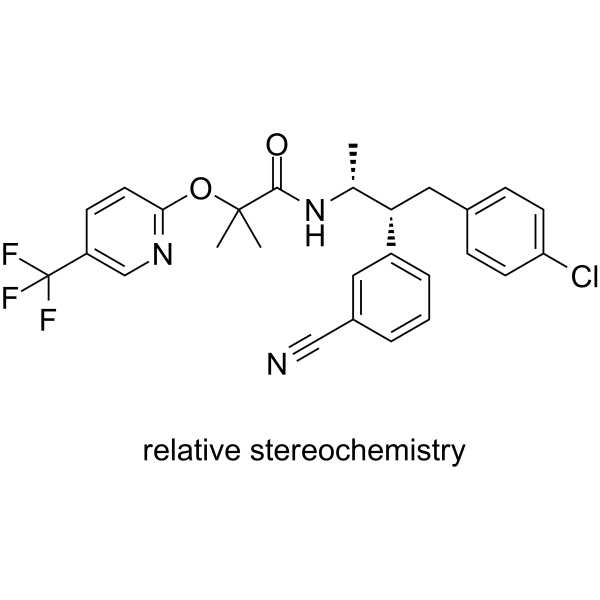
JTE-907
 0 ImagesJTE-907 is a selective and orally active cannabinoid CB2 receptor inverse agonist and exerts anti-inflammatory effects. JTE-907 upregulates IL-6, MCP-1, IL-1β, VEGF, ANGPTL4, and TRPV1 in mature adipocytes. JTE-907 downregulates CB1, MCP-1, and IL-1β in preadipocytes. JTE-907 inhibits ear swelling in mice. JTE-907 reverses the protective effects of CB2 agonists and Anandamide (HY-10863) against cytokine-evoked colonic mucosal damage. JTE-907 can be used for the research of allergic dermatitis, obesity, and colitis.
-
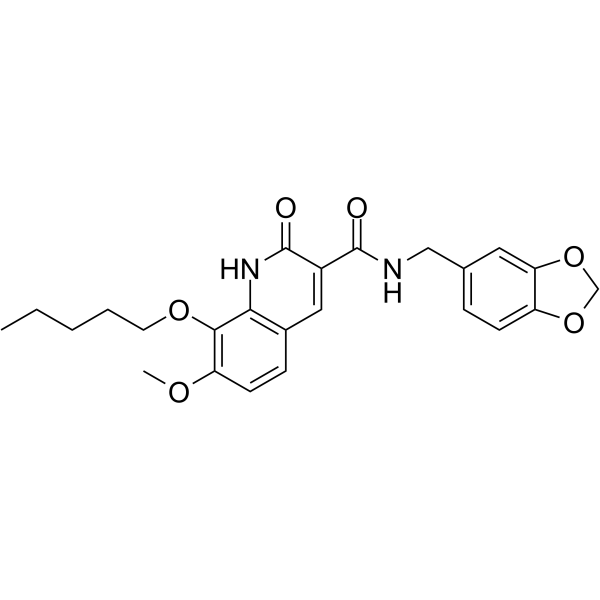
URB447
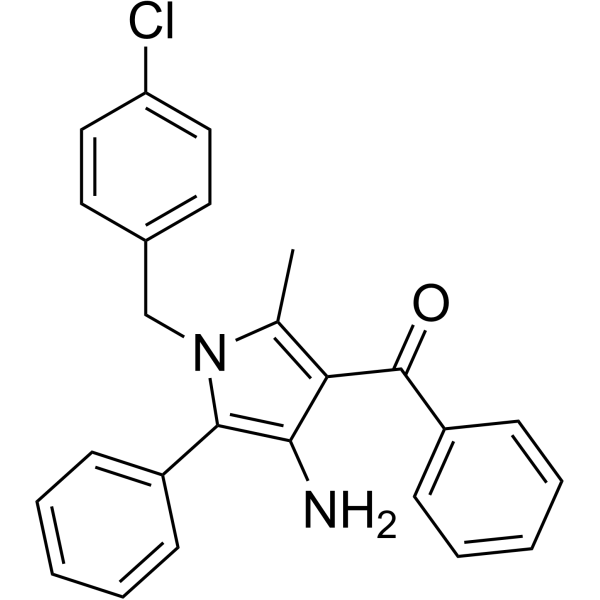 0 ImagesURB447 is a peripherally restricted CB1 cannabinoid antagonist (IC50: 313 nM and 41 nM for rat CB1 and human CB2 receptor respectively ). URB447 lowers food intake and body-weight gain in mice without entering the brain or antagonizing central CB1-dependent responses. URB447 can be used for research of obesity.
-
2-Palmitoylglycerol
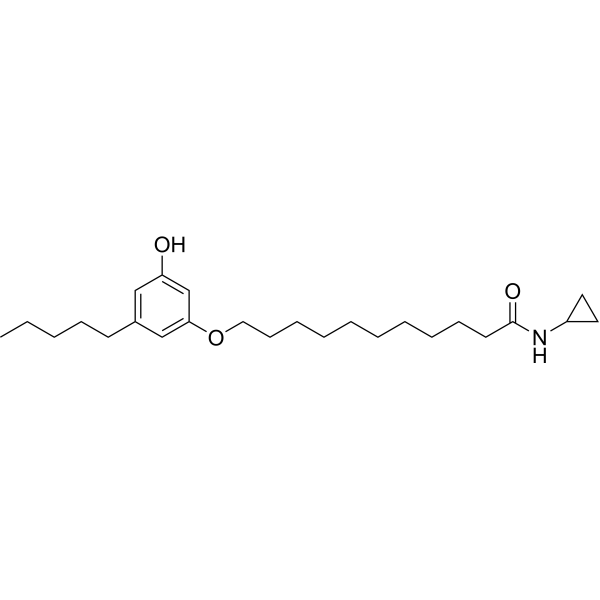
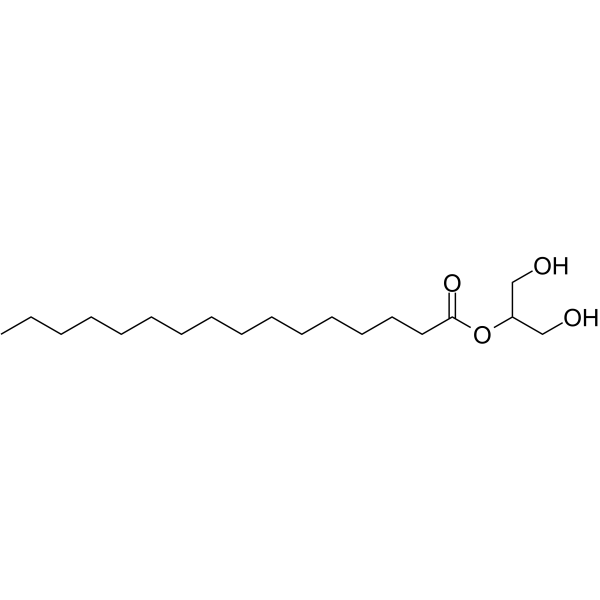 0 ImagesSynonyms: 2-Palm-Gl2-Palmitoylglycerol (2-Palm-Gl), an congener of 2-arachidonoylglycerol (2-AG), is a modest cannabinoid receptor CB1 agonist. 2-Palmitoylglycerol also may be an endogenous ligand for GPR119.
-
CB1R Allosteric modulator 5
 0 ImagesCB1R Allosteric modulator 5 (compound 3) is a selective, and blood-brain barrier (BBB) permeable Cannabinoid receptor type 1 allosteric modulator with a pIC50 of 6.89. CB1R Allosteric modulator 5 attenuates both cocaine-seeking behavior specific to cue-induced reinstatement and cocaine-induced behavioral sensitization without altering locomotor activity.
-
Cannabidivarinic acid
 0 ImagesSynonyms: CBDVACannabidivarinic acid (CBDVA), the carboxylic acid precursor of Cannabidivarin(CBDV), is a non-psychoactive cannabinoid found in Cannabis with anti-inflammatory properties.
-
(1H-Indol-3-yl)(2,2,3,3-tetramethylcyclopropyl)methanone
 0 ImagesSynonyms: UR-144 Impurity 3(1H-Indol-3-yl)(2,2,3,3-tetramethylcyclopropyl)methanone (UR-144 Impurity 3) is a precursor in the synthesis of synthetic cannabinoids.
-
Linoleoyl ethanolamide-d4
 0 ImagesLinoleoyl ethanolamide-d4 is a deuterated labeled Linoleoyl ethanolamide. Linoleoyl ethanolamide (Linoleic acid monoethanolamide) is classified as a fatty acid ethanolamide. Linoleoyl ethanolamide only weakly binds G-protein-coupled cannabinoid receptors of type-1(CB1)and CB2 receptors, and inhibits the binding of [3H]CP-55,940 with Kis of 10 and 25 μM, respectively. Linoleoyl ethanolamide is 4-fold less potent than anandamide at causing catalepsy in mice and it does not prolong sleep time.
-
A-836339
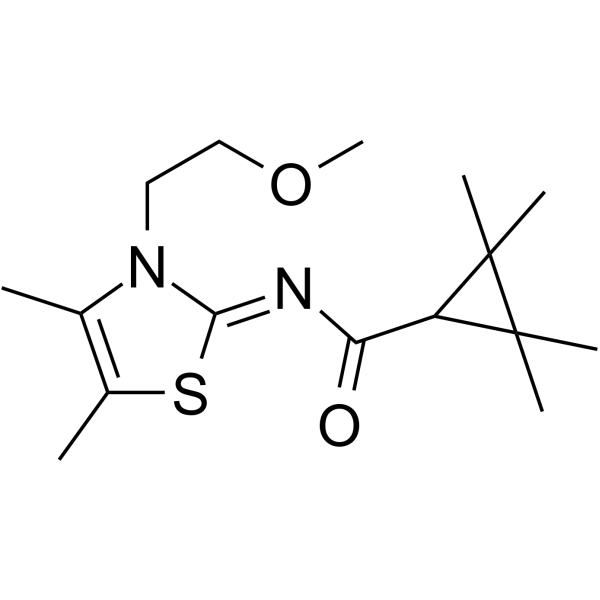 0 ImagesA-836339 is a selective CB2 receptor agonist, with Ki values of 0.4 nM and 0.8 nM in humans and rats, respectively. A-836339 exhibits multiple effects such as analgesia, gastric protection, anti-inflammation, and antioxidant activity. A-836339 produces antinociceptive and analgesic activities by activating CB2 receptors in the dorsal root ganglia and spinal cord. A-836339 can also exert gastric protective effects through anti-inflammatory mechanisms (reducing TNF-α and IL-1β) and antioxidant mechanisms (enhancing the activities of CAT and SOD, and reducing H2O2). Radioactively labeled A-836339 can serve as a CB2-specific radioligand for autoradiography and PET imaging. A-836339 can be used in research on inflammatory pain, neuropathic pain, gastric ulcers, cerebral ischemia, etc.
-
ANEB-001
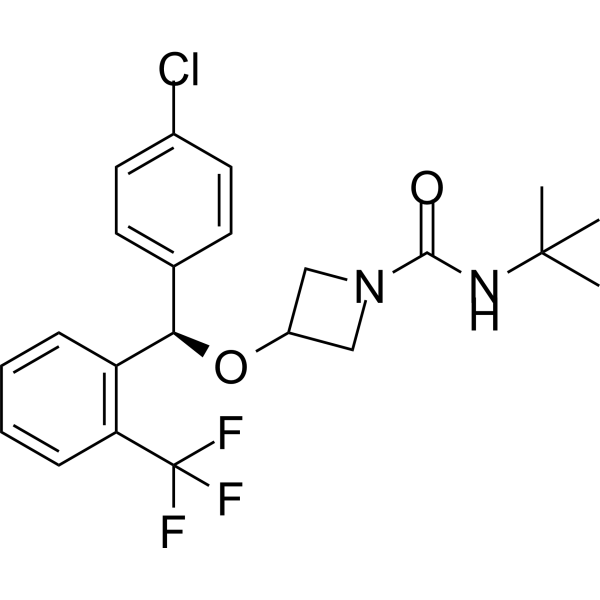 0 ImagesCat. No.: HY-148176CAS No.: 791848-71-0ANEB-001 is an orally active CB1 inhibitor, can be used to research acute cannabinoid intoxication.
-
Pregnenolone monosulfate-d4 sodium
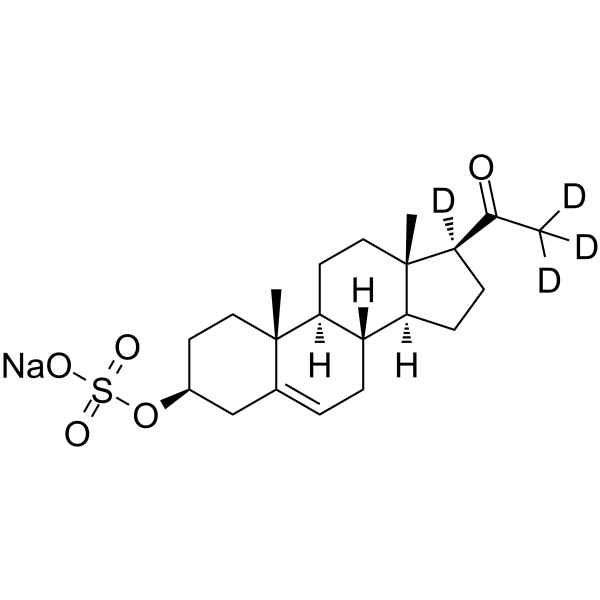 0 ImagesSynonyms: 3β-Hydroxy-5-pregnen-20-one monosulfate-d4 sodiumPregnenolone monosulfate-d4 sodium is the deuterium labeled Pregnenolone monosulfate sodium (HY-110189) . Pregnenolone monosulfate sodium (3β-Hydroxy-5-pregnen-20-one monosulfate sodium) is a powerful neurosteroid, the main precursor of various steroid hormones including steroid ketones. Pregnenolone monosulfate sodium acts as a signaling-specific inhibitor of cannabinoid CB1 receptor, inhibits the effects of tetrahydrocannabinol (THC) that are mediated by the CB1 receptors. Pregnenolone monosulfate sodium can protect the brain from cannabis intoxication. Pregnenolone monosulfate sodium is also a TRPM3 channel activator, and also can weakly activate TRPM1 channels.
-
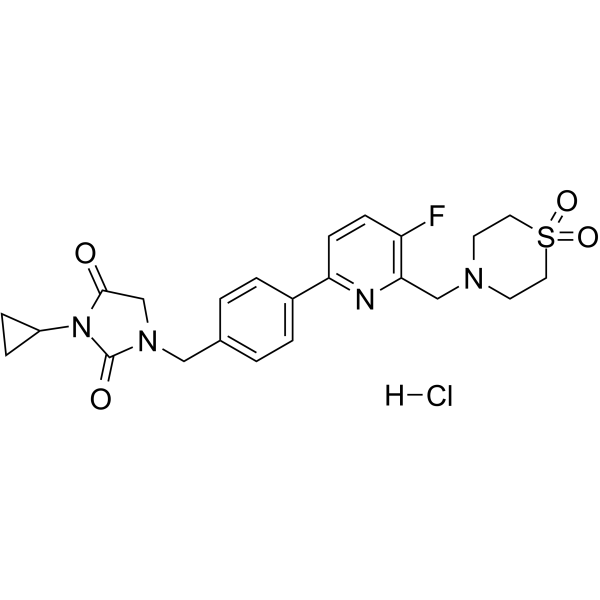
6α-Hydroxy-cannabidiol
 0 ImagesSynonyms: 6α-OH-CBD6α-Hydroxy-cannabidiol (6α-OH-CBD) is a metabolite of Cannabidiol.

-
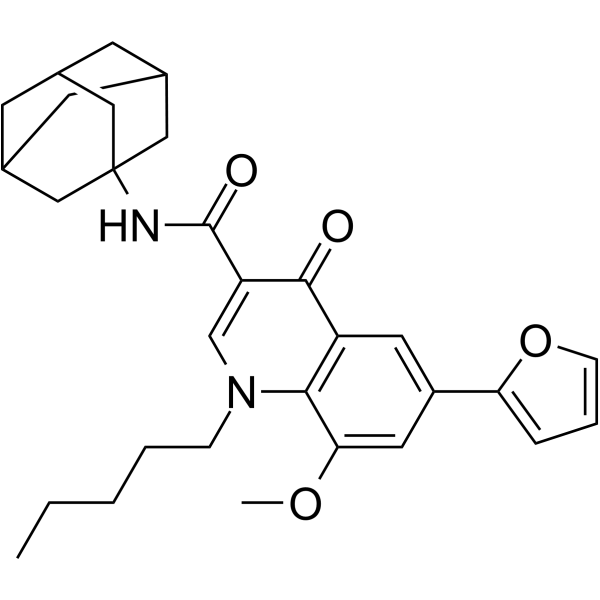
Docosahexaenoyl glycerol
 0 ImagesDocosahexaenoyl glycerol is an analog of endocannabinoid, which stimulates the glucose uptake and exhibits anti-inflammatory efficacy.
-
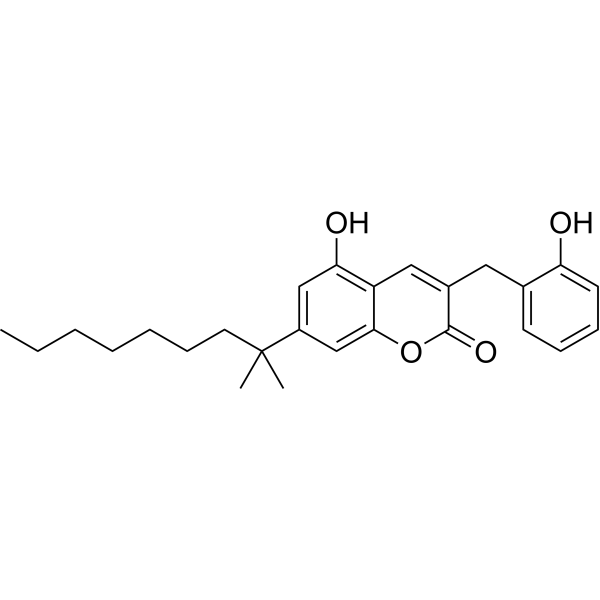
BPRCB1184
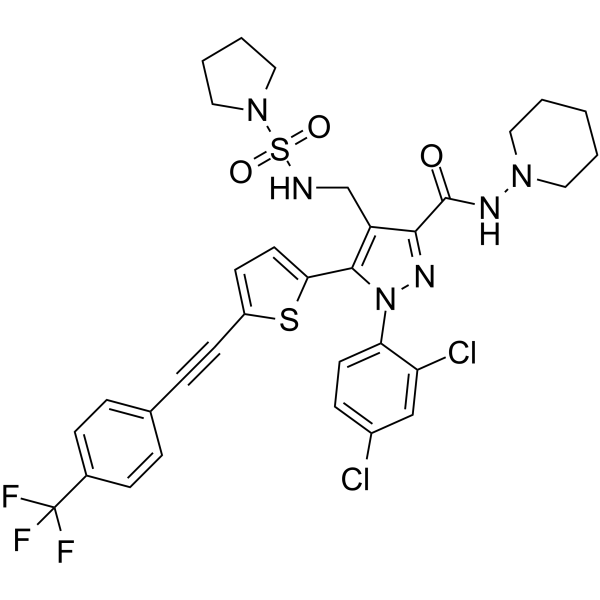 0 ImagesSynonyms: CB1-IN-1BPRCB1184 is a peripherally restricted 1-type cannabinoid receptor (CB1) antagonist, whose activity is associated with the regulation of obesity-related endocannabinoid system. BPRCB1184 regulates the activity of the endocannabinoid system, promotes lipid mobilization, reduces triglyceride storage, improves glucose metabolism, decreases food intake and body weight, while enhances insulin resistance and improves blood lipid levels. BPRCB1184 can be used in obesity-related research.
-
Pregnenolone-d4
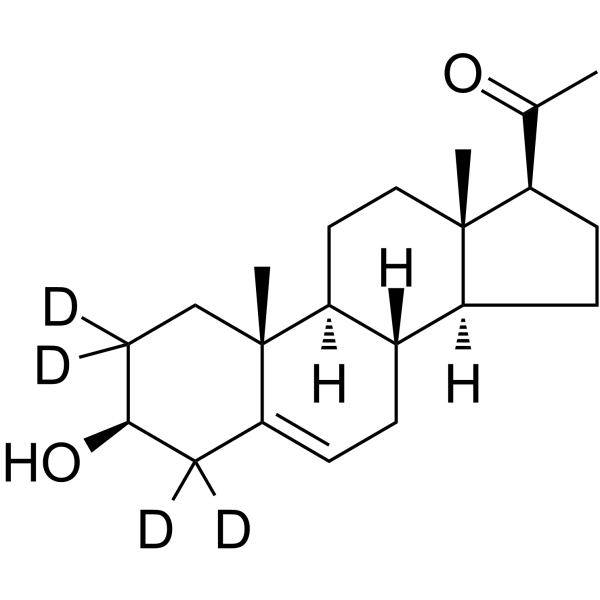 0 ImagesCat. No.: HY-B0151SSynonyms: 3β-Hydroxy-5-pregnen-20-one-d4Pregnenolone-d4 is the deuterium labeled Pregnenolone. Pregnenolone (3β-Hydroxy-5-pregnen-20-one) is a powerful neurosteroid, the main precursor of various steroid hormones including steroid ketones. Pregnenolone acts as a signaling-specific inhibitor of cannabinoid CB1 receptor, inhibits the effects of tetrahydrocannabinol (THC) that are mediated by the CB1 receptors. Pregnenolone can protect the brain from cannabis intoxication. Pregnenolone is also a TRPM3 channel activator, and also can weakly activate TRPM1 channels.




